
In-Home Pediatric Occupational Therapy
Choosing the right therapy setting for your child is an important decision. Some families prefer clinic-based therapy, while others choose in-home occupational therapy based on their child’s needs, routines, and family priorities.
In-home pediatric occupational therapy brings services into your child’s natural environments — where daily life happens and where skills are most often used.
Why Some Families Choose In-Home Occupational Therapy
Many parents choose home-based therapy because it allows support to happen within the context of real-life routines and environments.
Families may prefer in-home occupational therapy because it:
Takes place in a familiar, comfortable setting
Reduces transitions and travel time
Allows therapy to be directly integrated into daily routines
Supports skills where they are naturally used
Encourages family involvement and carryover
For some children, learning in their own environment helps them feel more regulated, engaged, and ready to participate.
Get Started
If you have questions about in-home occupational therapy or want help deciding which approach may be right for your child, we’re happy to talk.
What Is the Difference Between In-Home and Clinic-Based Therapy?
Both in-home and clinic-based pediatric occupational therapy can be effective. The main difference is where and how skills are practiced.
Choosing the Right Therapy Setting for Your Child
Both in-home and clinic-based occupational therapy can be effective. The best choice depends on your child’s needs, family routines, and therapy goals.
When deciding, families may consider:
Their child’s comfort with new environments
How easily skills transfer to daily life
Sensory and regulation needs
Family schedules and routines
Long-term goals for independence and participation
Some families find that needs change over time, and different settings may be helpful at different stages.


In-Home Pediatric Occupational Therapy
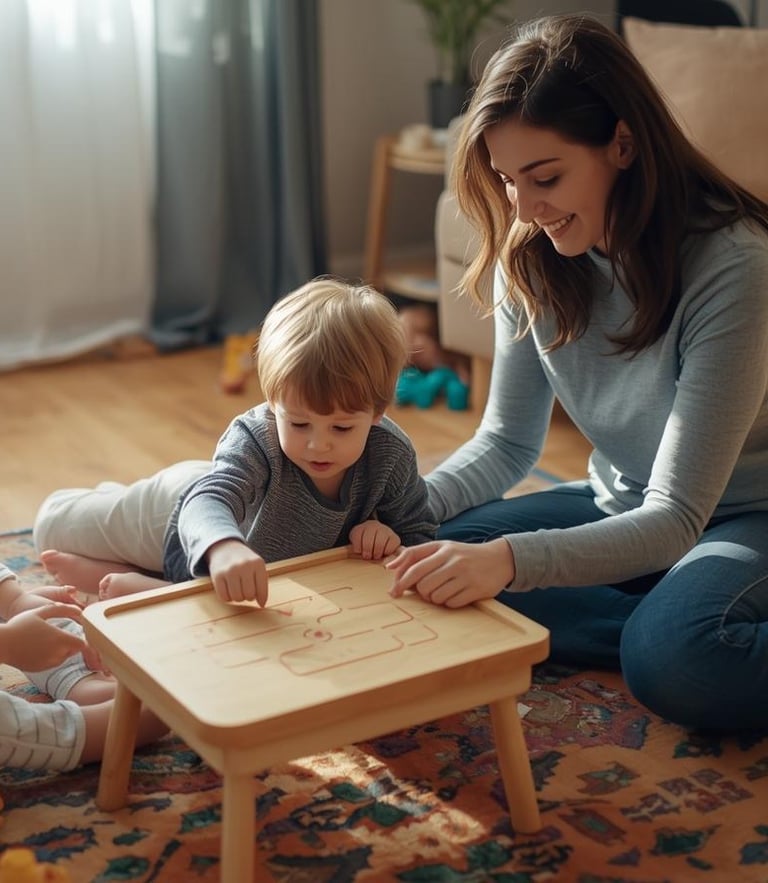
In-home pediatric occupational therapy provides services within your child’s natural environments, such as the home and community. Many families choose this approach because it allows therapy to be closely connected to daily routines and real-life activities.
In-home occupational therapy may be a good fit for families who want therapy to:
Take place in a familiar and comfortable setting
Reduce transitions and travel time
Address skills as they naturally occur throughout the day
Support carryover into daily routines
Involve parents and caregivers directly during sessions
Because therapy occurs where skills are used, children often have more opportunities to practice self-care, regulation, and participation in meaningful activities. Skills such as dressing, feeding, transitions, and play can be supported in the exact spaces where challenges occur.
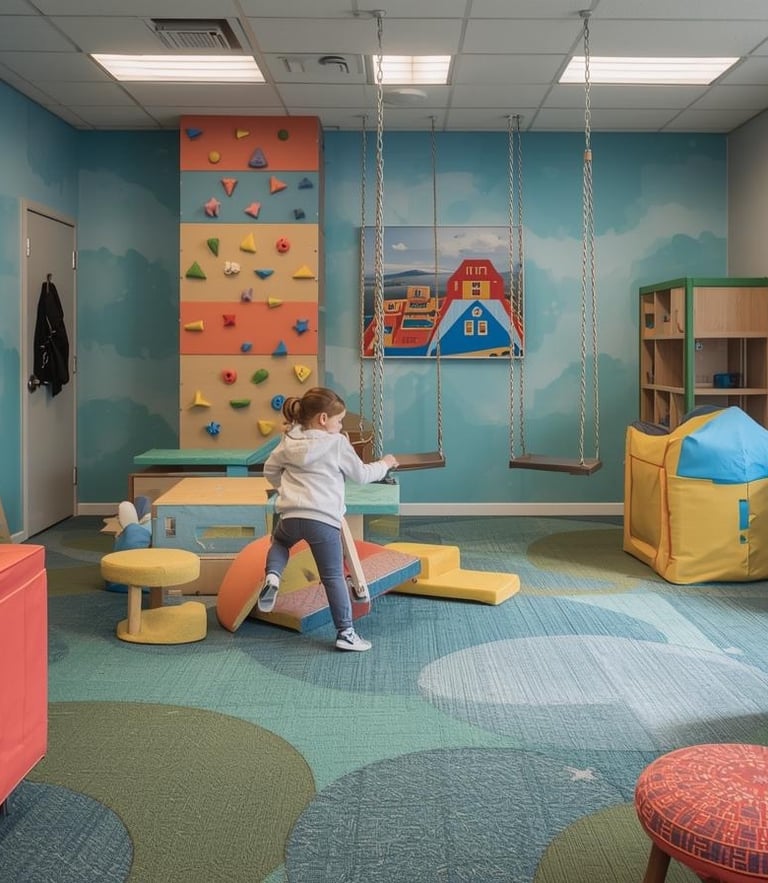
Clinic-Based Pediatric Occupational Therapy
Clinic-based pediatric occupational therapy takes place in a structured therapy setting designed specifically for intervention. Some children and families prefer this environment because it offers consistency and access to specialized therapy spaces and equipment.
Clinic-based therapy may be beneficial for families who value:
A predictable, structured environment
Specialized therapy tools and equipment
A clear separation between therapy and home life
Fewer environmental distractions for focused skill practice
For some children, the routine and boundaries of a clinic setting help support attention, engagement, and learning during sessions.


Learning Beyond the Home: Community-Based Skill Development
In-home occupational therapy may also include opportunities to practice skills in the community when appropriate. Community-based experiences help children apply skills in real-world situations and support independence.
Community-based therapy may focus on:
Navigating stores and public spaces
Participating in restaurants or cafés
Visiting libraries or community centers
Practicing safety skills in public environments
Developing social skills during everyday interactions
Building confidence and independence outside the home
These experiences help children generalize skills beyond therapy sessions and support meaningful participation in daily life.


Contact
Reach out for personalized support.


SOCIAL
Navigation
© 2025. All rights reserved.
Phone or text
(480) 818-5513